Garage Cleanouts in Dallas, TX
A garage is easier to clear when paint, chemicals, batteries, keepsakes, and active tools are separated before ordinary removal items.
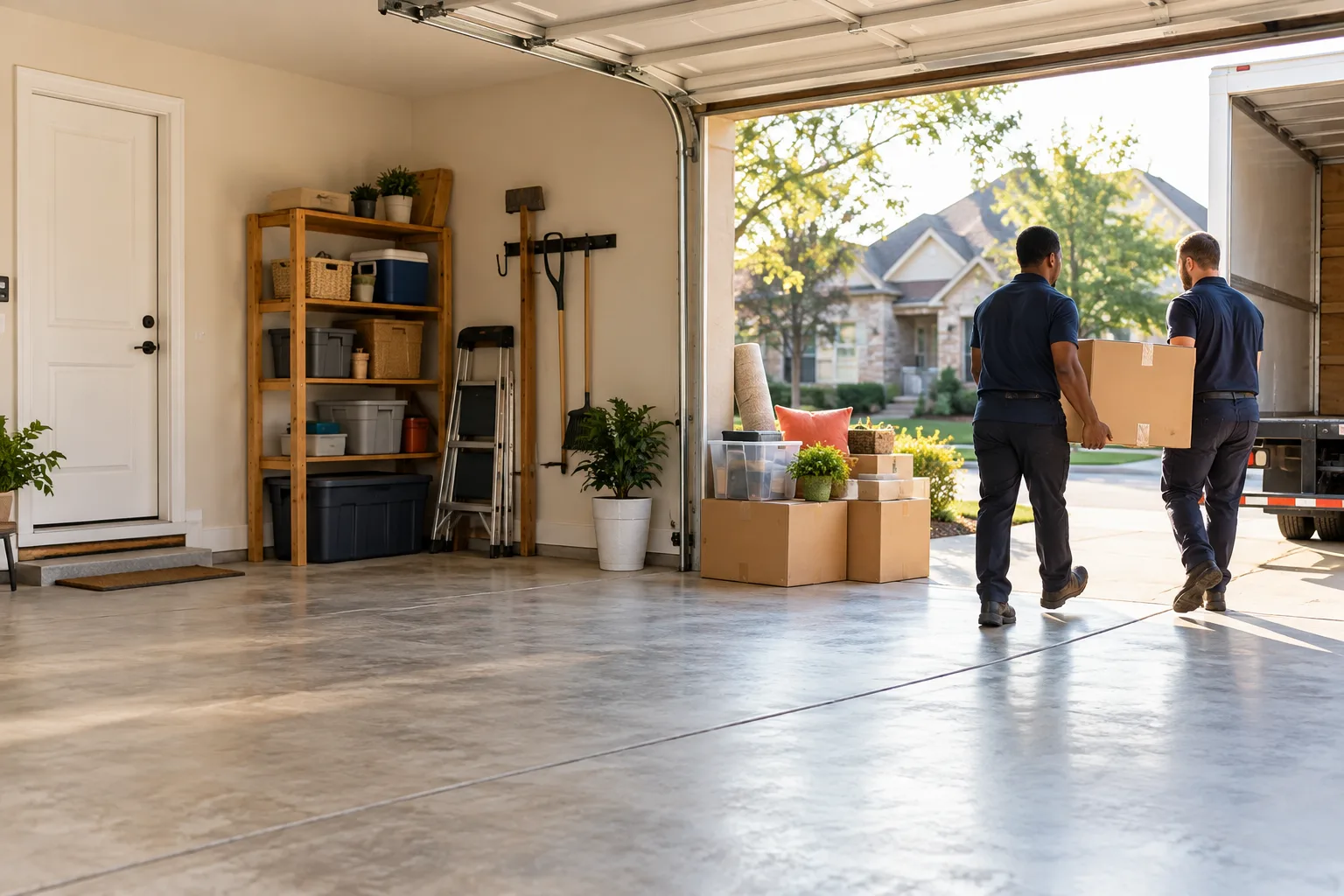
What this cleanout can cover
- Boxes, shelving contents, furniture, bikes, toys, and sporting equipment
- Partial or wall-to-wall garage clearing
- Loading from attached and detached garages with safe access
What needs a separate answer
- Paint, pesticides, fuels, oils, and unknown chemicals
- Loose sharp objects or exposed nails
- Automotive fluids, tires, or parts unless specifically approved
A cleanout that starts with a plan
Photos, item notes, and access details help the team prepare before arrival. Final scope and pricing depend on what is actually present and how it can be moved.
- Show the loadShare the rooms, large items, loose material, and anything still being sorted.
- Map the routeIdentify stairs, elevators, gates, parking, long carries, and building restrictions.
- Confirm the workReview the removal scope before loading begins. Keep undecided items in a separate zone.
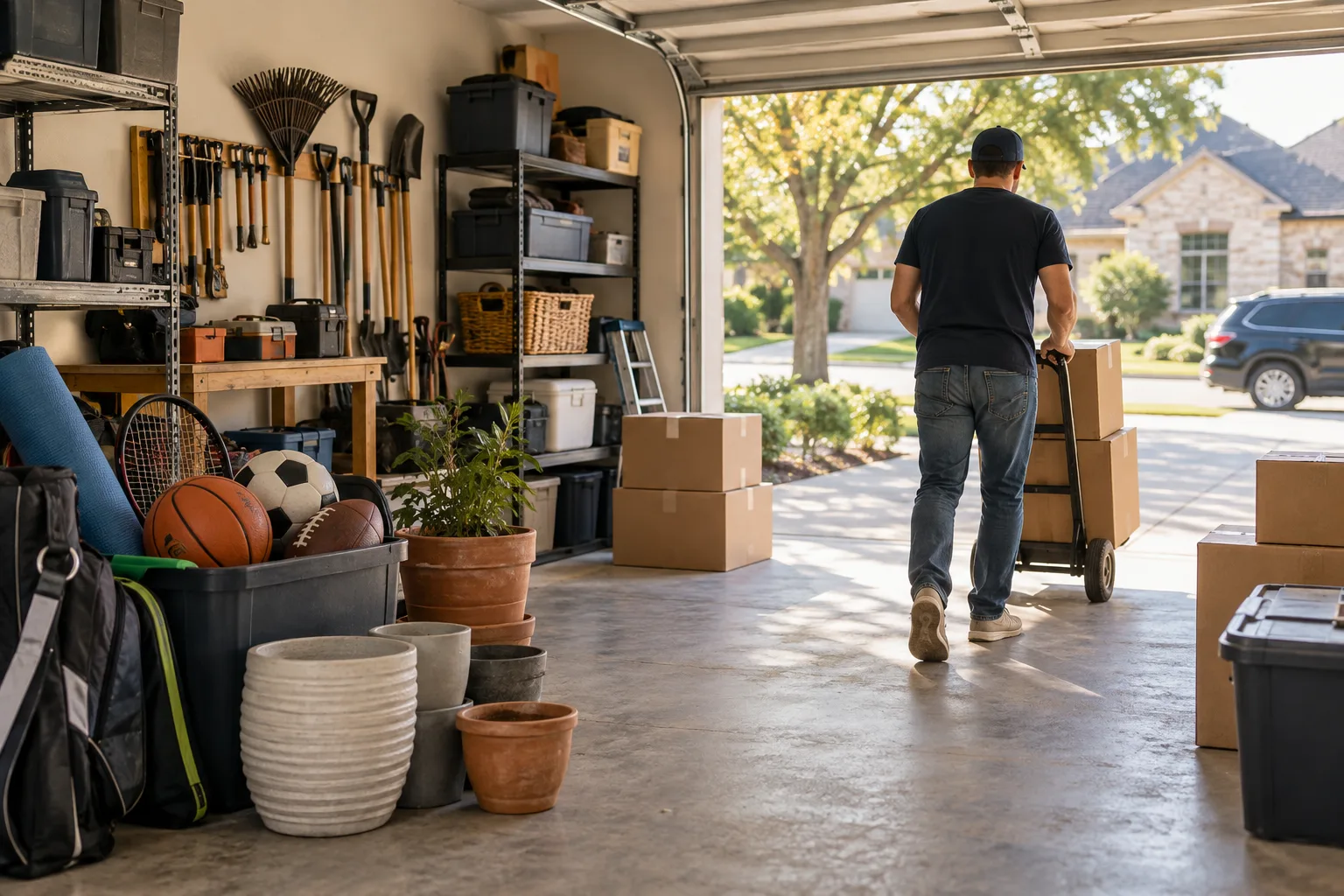
What shapes an estimate
No two clear-outs use the same route or truck space. These are the practical details to have ready:
- How much floor and shelf volume is occupied
- Loose versus boxed material
- Driveway or alley access
- Heavy or awkward items
Questions worth answering early
Do I need to sort everything first?
No, but clearly separate anything that must stay. Personal records, medications, jewelry, keys, and undecided items should not be mixed into the removal area.
Can the team work in an apartment or managed building?
Yes when the route, parking, elevator, access window, and any management requirements are confirmed before the visit.
What should I photograph?
Photograph each removal area, the largest items, stairs or narrow turns, and the path from the items to the loading point.
Start with the items and the access route.
Tell the team what needs to leave, where it is, and anything that affects loading.